


Why are my gluten-free cakes dry? It’s a question that can come up even when you’ve followed a recipe carefully. Sometimes a cake rises beautifully and looks exactly as it should, but once you cut into it, the crumb is dry, dense, or simply falls apart.
There isn’t necessarily one reason for this. It could be the flour you’re using, the balance of ingredients, or something as simple as leaving the cake in the oven a little too long.
But there’s something I think is often overlooked when it comes to gluten-free baking: the method can be just as important as the ingredients themselves.
Before changing your flour blend or looking for another recipe, it’s worth understanding a few of the things that might be affecting your cakes.
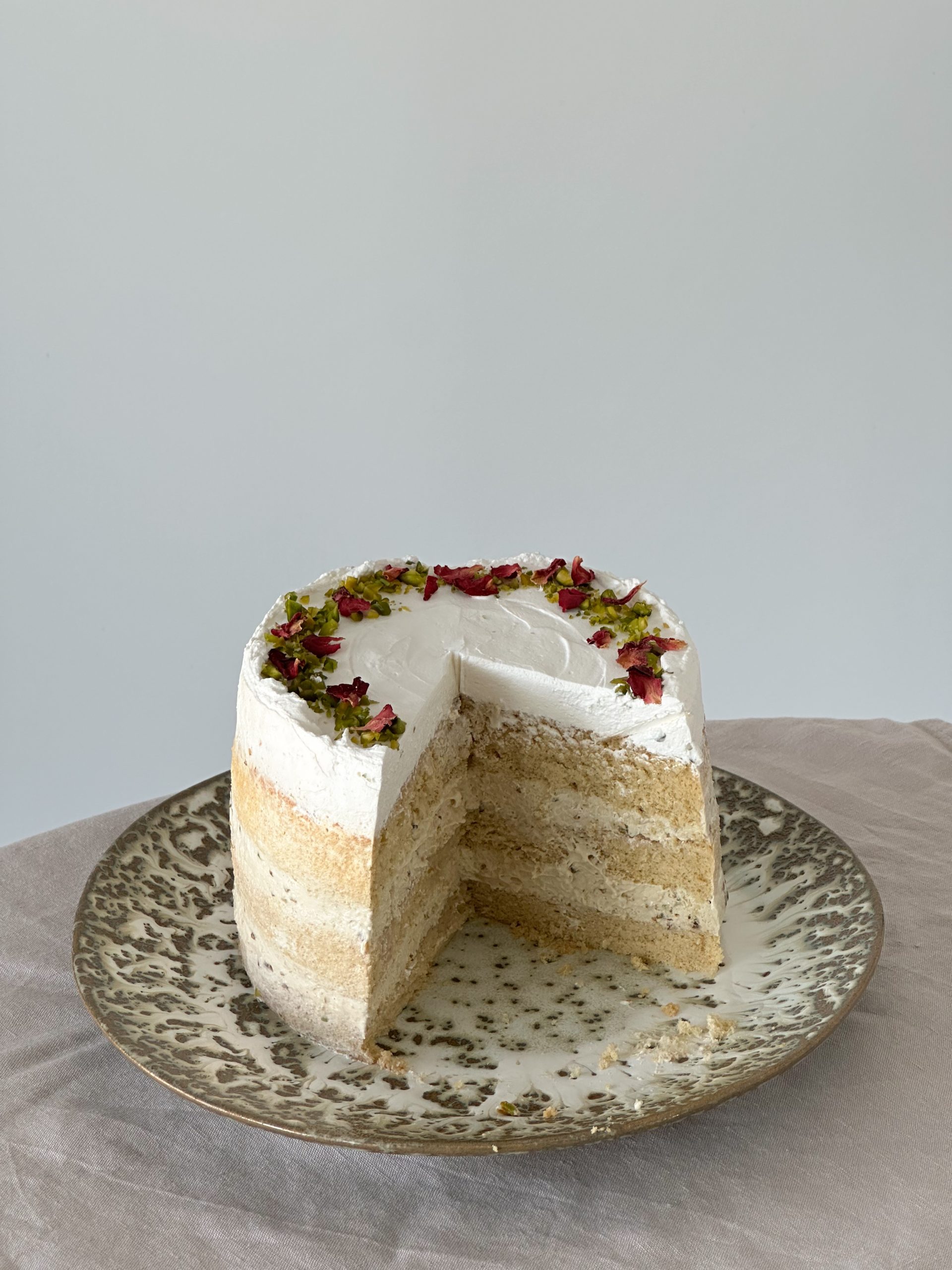
Here are seven common mistakes and some simple ways to avoid them.
1. Not All Gluten-Free Flours Work the Same Way
It’s easy to assume that one gluten-free flour blend can be replaced with another, especially when both are labelled as suitable for baking.
But gluten-free flours can behave quite differently.
Some blends contain mostly rice flour and starches, while others include ingredients such as sorghum, millet, almond flour, or additional binding agents. Each brings something different to the recipe, whether that’s structure, softness, moisture absorption, or flavor.
A blend that works perfectly in one cake might give you a completely different result in another.
For example, if a recipe was developed with a particular flour mixture, replacing it with a blend that absorbs more liquid could make the batter thicker and the finished cake drier.
My advice is to follow the flour recommendations in the recipe whenever possible, especially the first time you make it.
If you’d like to experiment with different blends, try changing one thing at a time. That way, it’s much easier to understand how each ingredient affects the result.
2. Adding More Flour Than the Recipe Needs
This might seem like a small detail, but measuring flour incorrectly can have a surprisingly big effect on cake texture.
If you’re using measuring cups, the amount of flour you end up with can vary depending on how you fill them. Scooping directly from the bag, for example, can pack more flour into the cup than you intended.
And a little extra flour can be enough to change the balance of a cake batter.
This is one of the reasons I prefer working with grams when baking.
A digital kitchen scale makes it much easier to measure ingredients accurately and repeat a recipe with consistent results.
If you’re following a recipe that provides measurements in grams, use them. It’s a simple habit that can save you quite a lot of frustration, particularly with gluten-free baking.
3. Changing Too Many Ingredients at Once
I know how tempting it can be to adapt a recipe to whatever ingredients you already have at home.
Perhaps you want to reduce the sugar, replace the oil, or try a different plant-based milk.
The problem is that these ingredients don’t just contribute flavor. They also affect the texture of the finished cake.
Sugar, for example, helps with moisture retention and tenderness. Fats contribute to softness, while the amount and type of liquid influence how the flours hydrate.
Changing several of these ingredients at the same time can make it difficult to understand why your cake isn’t turning out as expected.
This is particularly important when baking without gluten and dairy, where the recipe has often been developed around a specific combination of ingredients.
It doesn’t mean you can never make substitutions.
I would simply recommend making the original recipe first, then experimenting once you know how it’s supposed to turn out.
And if you’re looking for a dairy-free cake, choosing a recipe that was developed without dairy is usually more reliable than trying to adapt several ingredients in a traditional cake recipe.
4. Not Paying Enough Attention to Cake Structure
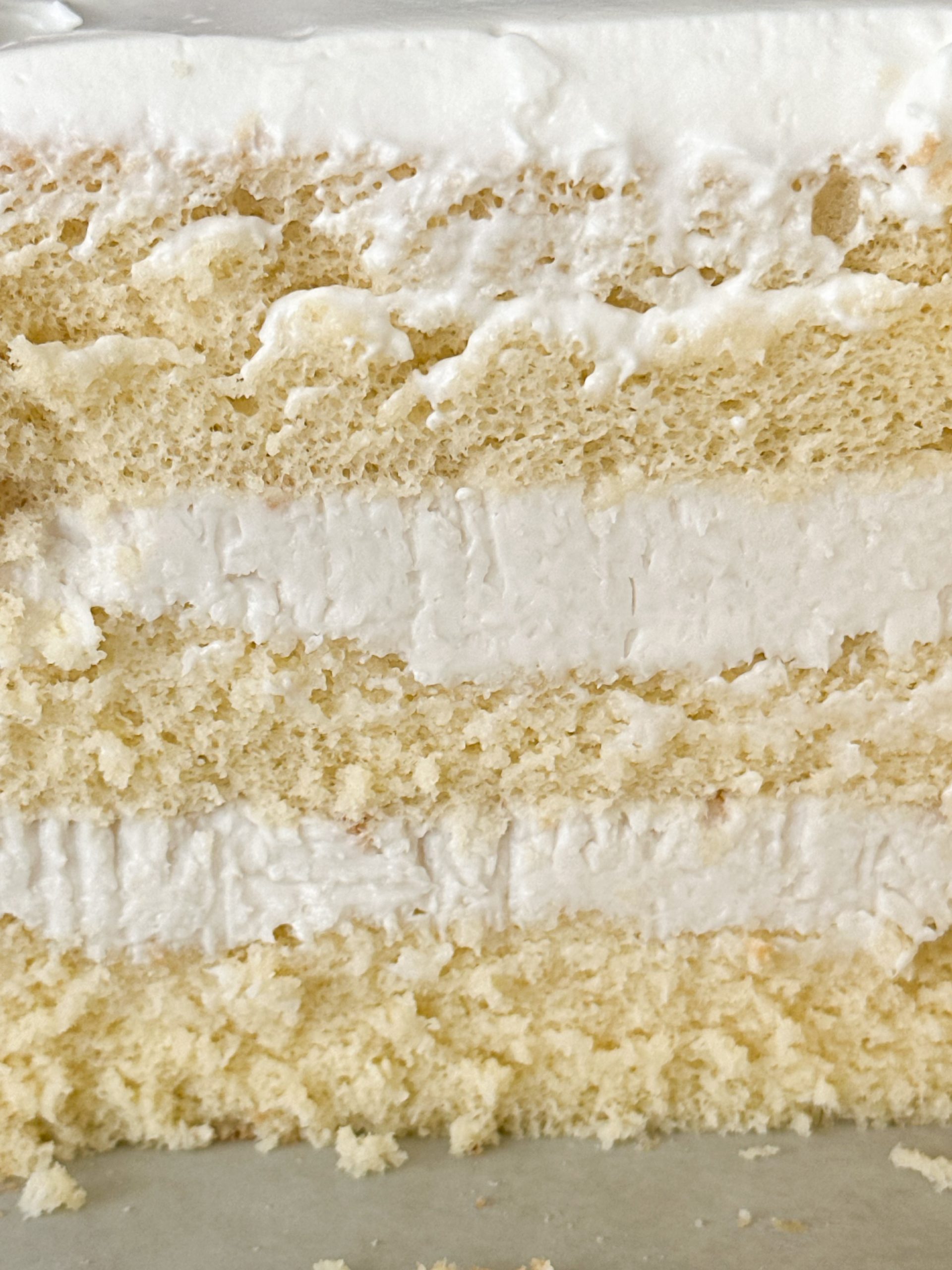
A gluten-free cake can be moist and still crumble when you try to slice it.
That’s because dryness and crumbliness aren’t always the same problem.
In traditional baking, gluten helps create the structure that holds everything together. Without it, we need to rely on the other ingredients in the recipe.
Depending on the type of cake, eggs, starches, and binding ingredients can all play a role.
Some gluten-free flour blends already contain xanthan gum, while others don’t. But that doesn’t mean every gluten-free cake needs extra xanthan gum added to it.
In fact, adding too much can sometimes create an unpleasant gummy texture.
What matters is how the ingredients work together.
If your cake feels soft but breaks apart easily, the problem might be related to its structure rather than a lack of moisture.
It’s worth checking that you’ve used the flour blend and binding ingredients specified in the recipe before making any adjustments.
5. Following the Ingredients but Overlooking the Mixing Method
This is something I think deserves much more attention in gluten-free baking.
We often spend a lot of time choosing the right flour or finding the perfect ingredients, but the way we prepare the batter matters too.
Think about the difference between a cake made with whipped egg whites and one where all the ingredients are simply mixed together.
Even if the ingredient lists look similar, the techniques used to prepare them can create very different textures.
Some cakes rely on air incorporated during mixing to help them rise. If that air is lost before the cake goes into the oven, the result can be noticeably denser.
Other recipes depend on different mixing techniques and don’t need the same delicate handling.
So while you’ve probably heard that you should never overmix cake batter, it isn’t quite that simple. The right approach depends on the type of cake you’re making.
The important thing is to understand why a recipe asks you to mix, beat, or fold ingredients in a particular way.
Pay attention to those instructions, especially when the recipe involves whipped eggs or a delicate batter.
Sometimes improving your cake isn’t about replacing an ingredient at all. It’s about changing how you use it.
6. Leaving the Cake in the Oven for Too Long
Overbaking is another common reason gluten-free cakes turn out dry.
Even a well-prepared batter can lose too much moisture if it spends longer in the oven than necessary.
And unfortunately, not all ovens behave the same way.
Your oven might run slightly hotter than the temperature you’ve selected, or it might have areas that heat more quickly than others.
The size of your cake pan also makes a difference. A thinner layer of batter will usually bake faster than a deeper one.
This is why I always recommend treating baking times as a guide rather than relying on the clock alone.
A few things worth checking:
Oven temperature: An oven thermometer can help you see whether your oven is heating accurately.
Cake pan size: Try to use the size recommended in the recipe.
Baking time: Start checking for doneness shortly before the suggested time, without opening the oven too early.
Cake texture: Pay attention to the signs of doneness described in your recipe.
For many cakes, a toothpick inserted into the center should come out clean or with a few moist crumbs, rather than wet batter. However, the ideal signs will depend on the type of cake.
The goal is to bake the cake through without leaving it in the oven longer than necessary.
7. Not Storing Your Cake Properly
Have you ever baked a cake that was beautifully soft on the first day, only to find that it felt much drier the following morning?
Sometimes the problem isn’t the recipe or the baking process at all.
Once a cake has cooled, leaving it exposed to air for too long can gradually affect its moisture and texture.
Refrigeration can also make certain cakes feel firmer, particularly when they’re served cold.
For cakes that don’t require refrigeration, storing them properly at room temperature can often help preserve their softness.
Once the cake has cooled according to the recipe’s instructions, keep it in an airtight container or wrap it well.
If you’re making a layer cake with perishable fillings, such as whipped plant-based cream, remember that it will need to be refrigerated.
And when it’s appropriate to do so, allowing a refrigerated cake to come closer to room temperature before serving may help improve its texture.
A little attention to storage can make a real difference, especially if you’re preparing a cake ahead of time.
If you’re looking for something new to bake, you can also explore my collection of gluten-free and dairy-free recipes.
How to Fix Dry Gluten-Free Cakes
If there’s one thing I’d like you to remember, it’s that a dry gluten-free cake doesn’t always mean you’ve chosen the wrong flour.
Of course, the ingredients are important. But so are the proportions, how the batter is prepared, and what happens during baking.
When something doesn’t turn out as expected, try paying attention to when the problem appears.
Is your cake already dry when it comes out of the oven? Does it feel moist but crumble when sliced? Or does the texture only change after you’ve stored it?
These little details can help you understand what might have gone wrong.
I’d also recommend avoiding the temptation to change several things at once. Start with one adjustment and see how it affects the result.
Gluten-free baking can take a little patience, but understanding how the ingredients and techniques work together makes the process much easier.
And once you begin to understand those details, it becomes easier to recognize what a particular recipe needs.
A Little More About My Gluten-Free Cake Method
If you enjoy baking layer cakes but have been struggling to achieve that soft, light texture, I’d love to introduce you to something I’ve been working on.
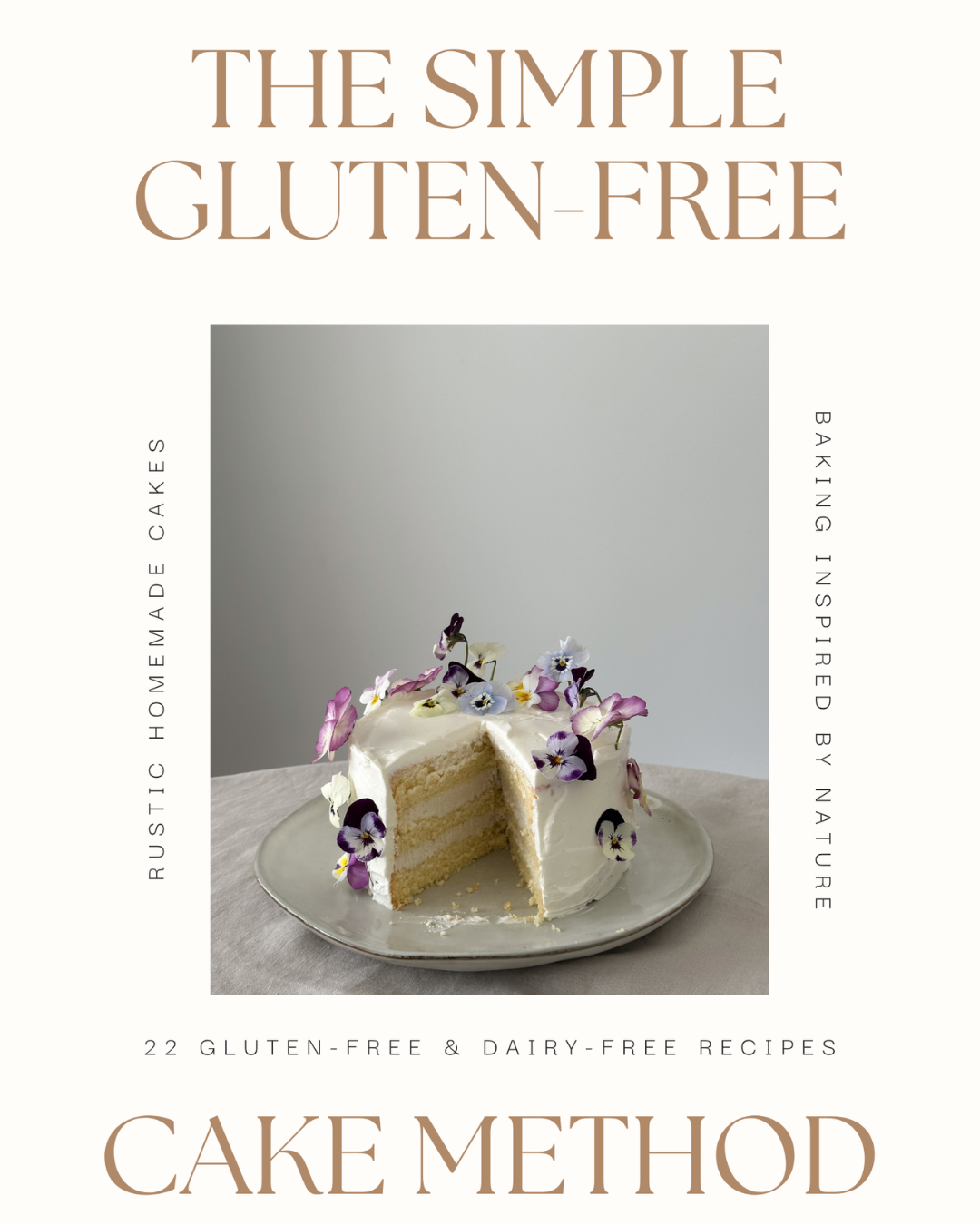
The Simple Gluten-Free Cake Method is my ebook dedicated to creating beautiful gluten-free and dairy-free layer cakes from scratch.
Inside, I share the step-by-step method behind my cakes, along with 22 recipes, filling ideas, and practical guidance to help you feel more confident throughout the baking process.
The idea behind the book is simple: making a beautiful gluten-free cake isn’t only about having the right ingredients. Understanding the method behind it can make a real difference.
If you’d like to explore my approach and see what’s included, you can discover the ebook below.
Discover The Simple Gluten-Free Cake Method
Happy baking!
xx Rita